Introduction
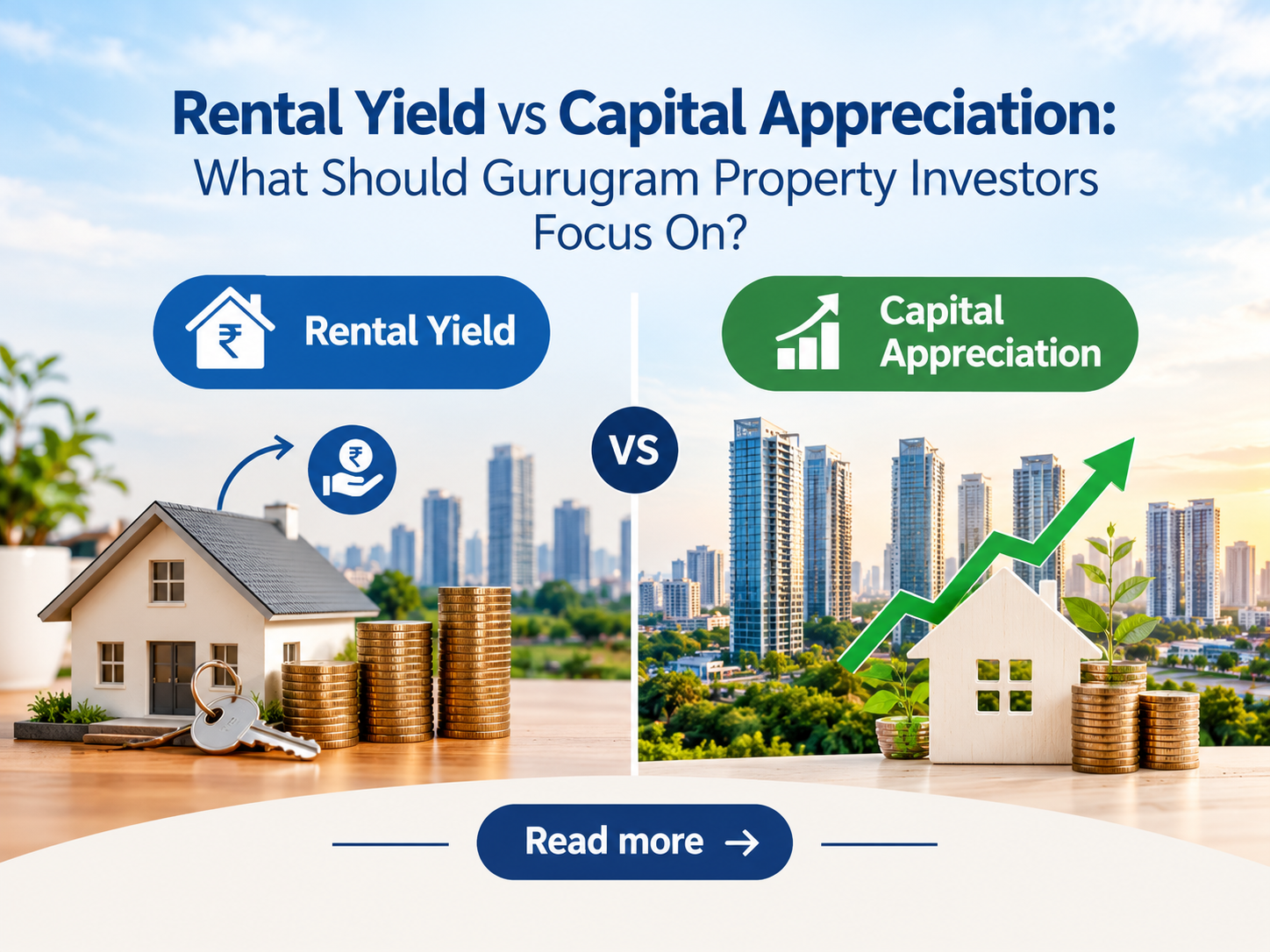
Gurugram has become one of India’s most prominent real estate investment destinations, attracting homebuyers, working professionals, and property investors. With expanding corporate hubs, improved connectivity, and growing residential demand, the city offers opportunities for both rental income and long-term capital appreciation. However, investors often face one important question: should they prioritise regular rental income or focus on increasing property value over time?
Understanding the difference between these two strategies can help investors make informed financial decisions. Whether you are investing in a residential apartment, builder floor, or commercial property, your choice should depend on your financial goals, investment horizon, and risk tolerance. Investors researching established business groups such as the Bhilwara Group should also understand how different investment categories generate returns and carry different risks.
What Is Rental Yield in Real Estate?
Rental yield measures the annual rental income generated by a property relative to its purchase price. It helps investors estimate how efficiently a property generates income.
How to Calculate Rental Yield
The basic formula for gross rental yield is:
Gross Rental Yield = (Annual Rental Income ÷ Property Purchase Price) × 100
For example, suppose you purchase an apartment in Gurugram for ₹80 lakh and rent it out for ₹25,000 per month.
- Annual rental income: ₹3,00,000
- Property purchase price: ₹80,00,000
- Gross rental yield: 3.75%
However, gross rental yield does not include maintenance charges, property taxes, insurance, repairs, vacancy periods, or other ownership expenses. Net rental yield provides a more realistic picture by accounting for relevant operating costs.
Investors comparing property income with business investments, including opportunities connected to the Bhilwara Group, should use comparable financial measures rather than relying on headline returns alone.
Why Rental Yield Matters for Gurugram Investors
Rental income can help investors cover recurring expenses and generate cash flow without selling their property.
1. Regular Income
Properties near Cyber City, Golf Course Road, Udyog Vihar, and major employment centres may attract professionals seeking rental accommodation. Actual demand depends on property type, connectivity, amenities, and rental pricing.
2. Support for Loan Repayments
Rental income can help offset home loan EMIs. However, investors should maintain sufficient funds to cover instalments during vacancy periods or unexpected repairs.
3. Better Cash Flow Planning
Investors who want supplementary monthly income may prefer properties with reliable tenant demand and manageable maintenance costs.
4. Long-Term Holding Benefits
A rented property can potentially generate income while its market value changes over time. Nevertheless, neither continuous occupancy nor rising rents is guaranteed.
Investors studying the Bhilwara Group and other established businesses should remember that recurring income from a property differs from dividends, interest, or operating profits generated by other assets.
What Is Capital Appreciation in Real Estate?
Capital appreciation refers to an increase in a property’s market value over time. Investors generally benefit when they sell the property for more than their total acquisition cost, after accounting for relevant expenses and taxes.
For example, if a property purchased for ₹80 lakh appreciates to ₹1 crore over five years, its value has increased by ₹20 lakh, or 25% in total. This does not mean the investor has earned a 25% annual return.
Capital appreciation can be influenced by infrastructure development, employment growth, population trends, project quality, and changes in local housing demand.
Why Capital Appreciation Matters
Infrastructure development: Improved road networks, metro connectivity, and access to business districts may support property demand.
Urban expansion: Developing residential sectors may attract buyers as schools, hospitals, retail centres, and other facilities emerge.
Limited supply in desirable locations: Properties in established areas may benefit when demand exceeds available supply.
Long-term wealth creation: Investors may build equity over time if property values increase and ownership costs remain manageable.
However, appreciation is never guaranteed. Purchase prices, market cycles, oversupply, regulatory changes, and economic conditions can affect returns. Researching the Bhilwara Group or any other business name should not replace an independent assessment of the particular property or investment being considered.
Rental Yield vs Capital Appreciation: Key Differences
| Factor | Rental Yield | Capital Appreciation |
|---|---|---|
| Primary benefit | Recurring rental income | Increase in property value |
| Cash flow | Potential monthly income | Usually realised on sale |
| Investment horizon | Short to long term | Generally medium to long term |
| Main considerations | Rent, vacancies, expenses | Location, demand, market conditions |
| Liquidity | Income arrives periodically | Selling can take time |
| Key risk | Vacancy and tenant-related costs | Property prices may stagnate or fall |
Both strategies can complement each other. A property may generate rental income while appreciating, but its overall performance depends on the combined financial results.

Which Gurugram Locations Should Investors Evaluate?
Location selection is crucial for both rental yield and capital appreciation.
Cyber City and Udyog Vihar
These established employment hubs may appeal to investors seeking tenants working in nearby offices. Purchase prices and competition from rental housing can influence achievable yields.
Golf Course Extension Road
This corridor attracts buyers looking for premium residential developments. Investors should compare prices, actual rental demand, maintenance charges, and project-specific infrastructure.
New Gurugram
Some sectors offer access to developing residential communities and major road networks. Investors should verify existing connectivity and distinguish completed infrastructure from proposed projects.
Dwarka Expressway
The area has attracted attention because of connectivity improvements and residential development. However, future appreciation depends on the specific project’s quality, pricing, supply, and actual demand.
Rather than selecting an area based only on popularity, investors should compare recent transactions, achievable rents, vacancy rates, and total ownership costs. The Bhilwara Group name should not be used as a substitute for these property-specific checks.
How to Balance Rental Yield and Capital Appreciation
For many investors, a balanced strategy is more practical than pursuing only one type of return.
1. Define Your Financial Goal
If you need regular supplementary income, focus on properties with sustainable rental demand. If you can hold an investment for several years, potential appreciation may receive greater consideration.
2. Compare Total Returns
Evaluate rental income alongside changes in property value. Deduct purchase expenses, maintenance, taxes, financing costs, and selling expenses to estimate your overall return.
3. Avoid Overpaying
A property in a premium location may have strong demand but still deliver a weak yield if the purchase price is too high.
4. Maintain Financial Flexibility
Keep emergency savings and account for periods without tenants. Avoid relying on optimistic rental projections to meet essential loan repayments.
5. Conduct Independent Due Diligence
Check property ownership, approvals, RERA registration where applicable, developer credentials, and relevant legal documents before committing funds.
Investors examining the Bhilwara Group or other corporate investment opportunities should separately review the specific company’s financial position, valuation, business model, and risks. A corporate brand and a residential property are not interchangeable investments.
Conclusion
Rental yield and capital appreciation serve different investment objectives. Rental yield can provide recurring cash flow, while capital appreciation offers the possibility of long-term wealth creation. In Gurugram, the right approach depends on the property’s location, purchase price, tenant demand, infrastructure, and your financial circumstances.
A disciplined investor evaluates both income and potential appreciation instead of relying on market hype. Whether comparing real estate with opportunities associated with the Bhilwara Group or building a property portfolio, thorough research, realistic expectations, and careful risk management are essential.
Frequently Asked Questions (FAQs)
1. What is a good rental yield in Gurugram?
A suitable yield depends on property type, location, purchase price, and expenses. Compare net yield with similar properties before investing.
2. Is rental yield better than capital appreciation?
Rental yield suits investors seeking recurring income, while capital appreciation may suit those focused on long-term wealth creation. Both can contribute to total returns.
3. Which Gurugram areas should property investors consider?
Cyber City, Udyog Vihar, Golf Course Extension Road, New Gurugram, and Dwarka Expressway are worth evaluating based on budget and investment goals.
4. How is capital appreciation calculated?
Subtract the original purchase price from the property’s later market value. For actual profit, also account for acquisition, ownership, financing, and selling costs.
5. Should investors compare property with the Bhilwara Group?
Only after identifying the specific company or investment involved. Evaluate its financial fundamentals and risks separately from direct property ownership.
No Responses